
1,500+ machines connected.
~70% of service issues resolved remotely.
One data model across the entire fleet.
TMI builds and delivers packaging machines worldwide. With StriData, they turned raw IXON data into a structured analytics layer used by service teams and customers across 40+ countries — without rebuilding dashboards per site.
The company
TMI is a packaging machine builder operating globally, delivering machines to customers across a wide range of production environments. Their installed base spans multiple countries, customers, and machine types — each generating large volumes of operational data.
Like many OEMs using IXON, TMI had connectivity in place. Machine data was available, but not structured in a way that could be used consistently across their service team or shared with customers at scale.
40+ countries worldwide
The challenge
TMI had connectivity in place through IXON. Machine data was available — including states, alarms, and production counters — but it was not structured in a way that could be used consistently across their organization.
Service teams worked reactively. Engineers would log into individual machines to investigate issues as they occurred, without a clear overview of patterns across machines, customers, or time. Every analysis started from scratch.
At the same time, customers increasingly expected access to their own machine performance. Delivering this required building dashboards per customer — an approach that quickly becomes unmanageable as the installed base grows.
What StriData did
Instead of building dashboards per customer, StriData introduced a structured data layer for TMI’s machine types — making it possible to deploy analytics consistently across the entire installed base.
Connect and extract machine data
StriData connects directly to TMI’s IXON environment and extracts machine states, alarms, and production counters through the API — without changes to the existing setup.
Build a standardized data model
Machine data is structured into a reusable model with consistent KPI definitions for each machine type. This model is built once and forms the foundation for all analytics.
Apply across the entire fleet
The same data model is applied to every connected machine and customer site. New deployments inherit the structure instantly — no rebuilding required per customer.
A scalable analytics layer across TMI’s installed base
With one standardized data model in place, TMI moved beyond one-off troubleshooting and customer-specific reporting toward a repeatable analytics setup that scales across sites, machines, and customers.
The result is not just faster reporting. TMI now has a structured way to analyze machine performance across its fleet, support customers with direct access to their data, and expand remote service without rebuilding the setup for every new deployment.
What this looks like in practice
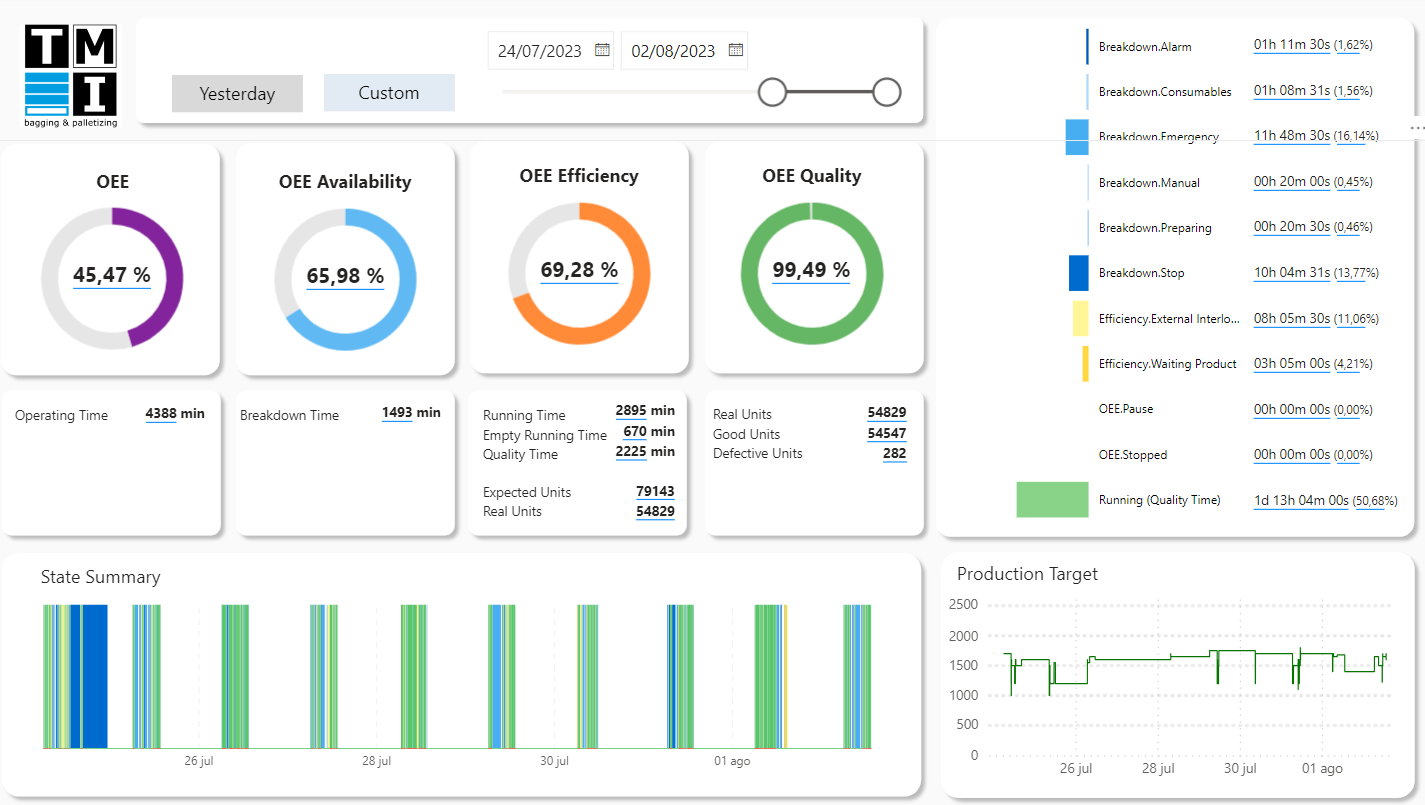
TMI’s Power BI environment gives service teams and customers direct visibility into machine performance, downtime, and OEE across connected sites.
What TMI says about working with StriData
“We are very grateful for the partnership with StriData and their willingness to ensure the customer's needs. They offer excellent service, always with a good attitude.”
Want to see what this could look like for your machines?
The Quick Scan is the best starting point if you already have machine connectivity in place and want to understand what a scalable reporting or service setup could look like for your installed base.
Request Quick Scan